C-S43-2601 Reliable Real Test - C-S43-2601 Top Dumps
Wiki Article
We strongly recommend the C-S43-2601 exam questions compiled by our company. On one hand, our C-S43-2601 test material owns the best quality. When it comes to the C-S43-2601 study materials selling in the market, qualities are patchy. But our C-S43-2601 test material has been recognized by multitude of customers, which possess of the top-class quality, can help you pass exam successfully. On the other hand, our C-S43-2601 Latest Dumps are designed by the most experienced experts, thus it can not only teach you knowledge, but also show you the method of learning in the most brief and efficient ways.
We at Fast2test give you the techniques and resources to make sure you get the most out of your exam study. We provide preparation material for the SAP Certified Implementation Consultant - SAP S/4HANA Cloud Private Edition, Asset Management (C_S43_2601) exam that will guide you when you sit to study for it. C-S43-2601 updated questions give you enough confidence to sit for the SAP exam.If you take enough practice tests on C-S43-2601 Practice Exam software by Fast2test, you’ll be more comfortable when you walk in on SAP exam day. So, go with C-S43-2601 exam questions that are prepared under the supervision of industry experts to expand your knowledge base and successfully pass the certification exam on the first attempt.
>> C-S43-2601 Reliable Real Test <<
C-S43-2601 Top Dumps & Reliable C-S43-2601 Mock Test
This relieves any sort of anxiety in the candidate mind before the purchase of SAP C-S43-2601 exam preparation material. This C-S43-2601 exam study material is offered to you at a very low price. We also offer up to 365 days of free updates on SAP C-S43-2601 Dumps after the date of purchase.
SAP Certified Implementation Consultant - SAP S/4HANA Cloud Private Edition, Asset Management (C_S43_2601) Sample Questions (Q10-Q15):
NEW QUESTION # 10
Schedule a Maintenance Plan
The project team evaluates during the implementation project the scheduling of Maintenance Plans in SAP S
/4HANA Asset Management. The following features need to be checked:
Schedule a Maintenance Plan
Display a generated Maintenance Order
Schedule the previously created Maintenance Plan. The following prerequisites have to be met:
The next upcoming call is the 4 MON Maintenance Package
Calculate the Completion Date of the last Maintenance Package as follows: Today's date minus 4 weeks (e.g.
today's date: 15th of December > > > Completion Date: 17th of November) The Call Date is always 10 days before the Plan Date.
Note:
Check your Maintenance Plan and adapt it, if necessary, before you schedule it.
Check the following information in the generated Maintenance Order:
number of order operations: 2
Maintenance Plan: number of the previously created Maintenance Plan
Last Included Task List: A / TL-## / 1
Answer:
Explanation:
See the Explanation for complete Solution of this Task.
Explanation:
Task 9 Overview
The goal of this task is to trigger the maintenance schedule you built in Task 8 so that the system generates an actual work order. You must meet specific scheduling conditions to ensure the right maintenance cycle (the 4- month package) is triggered.
Step 1: Adapt Scheduling Parameters (IP02)
Before starting the schedule, you must ensure the "Call Date" rules are correct.
* Transaction : Enter IP02 (Change Maintenance Plan).
* Maintenance Plan : Enter the number you saved in Task 8 and press Enter .
* Scheduling Parameters Tab :
* Call Horizon : Adjust this so that the Call Date occurs exactly 10 days before the Plan Date.
* Note: If your system uses percentages, you will need to calculate the percentage of the 4-month cycle that results in a 10-day lead time.
* Save your changes.
Step 2: Schedule the Plan (IP10)
Now you will "start" the clock for this maintenance schedule.
* Transaction : Enter IP10 (Schedule Maintenance Plan).
* Maintenance Plan : Enter your plan number and press Enter .
* Start Scheduling : Click the Start icon (or go to Maintenance plan > Scheduling > Start ).
* Enter the "Start Date" / "Completion Date" :
* The Rule : You must use Today's date minus 4 weeks .
* Example: If today is April 19, enter March 22.
* Press Enter . The system will calculate the next calls.
* Verify the Package : Ensure the next upcoming call is indeed the 4 MON (4-month) Maintenance Package.
* Save (Floppy Disk icon). This will generate a new Maintenance Order number.
Step 3: Verify the Generated Maintenance Order
You must now check that the order was created correctly based on the rules of your Task List (Task 7) and Maintenance Plan (Task 8).
* Display Order : In IP10 , select the line for the generated call and click the Display Order icon (or use transaction IW33 with the new order number).
* Check the following three items :
* Operations : Verify there are exactly 2 operations in the order (the Monthly and 4-Month tasks).
* Maintenance Plan : Confirm the order shows your specific Maintenance Plan number.
* Task List : Verify the "Last Included Task List" is A / TL-48 / 1 .
NEW QUESTION # 11
Use Phase-Based Maintenance Processing
The project team evaluates during the implementation project Phase-Based Maintenance Processing in SAP S
/4HANA Asset Management. The following features need to be checked:
* Initiate and screen a Maintenance Notification
* Plan Maintenance Order and send it for approval
* Create a Maintenance Notification using an already available notification type which is suitable for phase-based maintenance and save it.
Use the following data:
* Screen and accept the just created Maintenance Notification.
* Create an Order (Phase-based) for your accepted notification and submit it for approval.
Use the following data:
Answer:
Explanation:
See the Explanation for complete Solution of this Task.
Explanation:
Task 10 Overview
This task evaluates your ability to manage the newer, phase-led maintenance workflow in SAP S/4HANA.
Unlike the traditional "emergency" repair you did earlier, this process includes formal screening and approval steps Step 1: Create a Phase-Based Maintenance Notification In this step, you initiate the request.
* Access the Transaction : Use transaction IW21 or the Fiori app Create Maintenance Request .
* Select Notification Type : Use a type configured for phase-based maintenance (typically Y1 - Maintenance Request ).
* Enter the Following Data :
* Technical Object : T-PB48
* Description : Defective pump (phase-based)
* Current Location : Production Line 1
* Detection Method : Continuous Condition Monitoring
* Operational Effect : Production restricted
* Save : Note the notification number generated.
Explanation : This step "initiates" the maintenance process. In phase-based maintenance, the notification starts in the Initiation phase, where it must be reviewed before any work is planned.
Step 2: Screen and Accept the Notification
As a "Maintenance Coordinator," you must now review the request.
* Access the Fiori App : Open Screen Maintenance Requests .
* Locate Your Notification : Find the notification you just created for T-PB48.
* Perform Screening :
* Review the details to ensure they are complete.
* Click Accept to move it to the next phase.
Explanation : "Screening" is a quality gate. It ensures that the maintenance team only spends time planning valid, well-described issues. Once accepted, the notification moves from the Initiation phase to the Screening phase and finally becomes available for planning.
Step 3: Create and Plan the Phase-Based Order
Now you will create the formal work order for the accepted request.
* Create Order : From within the accepted notification, or using the Manage Maintenance Backlog app, choose to Create Order .
* Enter Planning Data :
* Technical Object : T-PB48
* Operation 0010 Description : Repair damage
* Operation 0010 Work : 2 h
* Submit for Approval : Look for the Submit for Approval button at the top of the order screen.
Explanation : This step moves the order into the Planning phase. By submitting it for approval, you are requesting the budget and resources to perform the work. The order status will change to indicate it is
"Waiting for Approval"
NEW QUESTION # 12
Task: 5
Configure and create a Maintenance Notification
The project team evaluates during the implementation project the Maintenance Notifications in SAP S
/4HANA Asset Management. The following features need to be checked:
* Configure and create a Maintenance Notification
* Assign catalog specific data to a Maintenance Notification
* Create a Maintenance Notification and save it. Use the following information:
* Assign the following data to the just created notification:
Answer:
Explanation:
See the Explanation for complete Solution of this Task.
Explanation:
Task 5 Overview
The project team is evaluating Maintenance Notifications in SAP S/4HANA Asset Management. This task involves creating a notification and assigning catalog-specific data to it.
Step 1: Create the Maintenance Notification
In this step, you will record a technical problem in the system.
* Access the Transaction : Use transaction code IW21 (Create Maintenance Notification) in the SAP GUI or the corresponding Fiori app.
* Initial Screen :
* Notification Type : Enter Z1 .
* Press Enter .
* Enter General Data :
* Description : Enter Pump is leaking .
* Priority : Select High .
* Equipment : Enter T-PA48 .
* Save : Click the Save (floppy disk) icon to generate a notification number.
Explanation : Creating a notification is the first step in the maintenance process. It documents the "what" (leaking pump), the "how critical" (high priority), and the "where" (Equipment T-PA48).
Step 2: Assign Catalog Specific Data
Now you must assign technical codes to describe the damage precisely for future reporting and analysis.
* Access the Transaction : Use transaction code IW22 (Change Maintenance Notification) to open your recently created notification.
* Navigate to Item Data : Go to the Items tab or the relevant section for damage and causes.
* Enter Damage Details :
* Damage Code Group : PMP-100 .
* Damage Code : 1000 .
* Description : Leaking .
* Enter Object Part Details :
* Object Part Code Group : PMP-Z48 .
* Object Part Code : 1001 .
* Description : Inlet/Outlet .
* Enter Cause Details :
* Cause Code Group : PMP-248 .
* Cause Code : 2000 .
* Description : Material fatigue .
* Save : Click the Save icon to finalize the notification.
Explanation : Assigning catalog data categorizes the issue using standardized codes. This allows the company to run "Bad Actor" reports later to see, for example, how many pumps are failing due to "Material fatigue" versus "Operator error".


NEW QUESTION # 13
Task 4: Configure and create Technical Objects
The project team evaluates during the implementation project Technical Object structures in SAP S/4HANA Asset Management. The following features need to be checked:
* Configure and create Functional Locations
* Create, serialize and install Equipment
* Create Functional Location master record ZZ0##-01 and save it. Use the following information: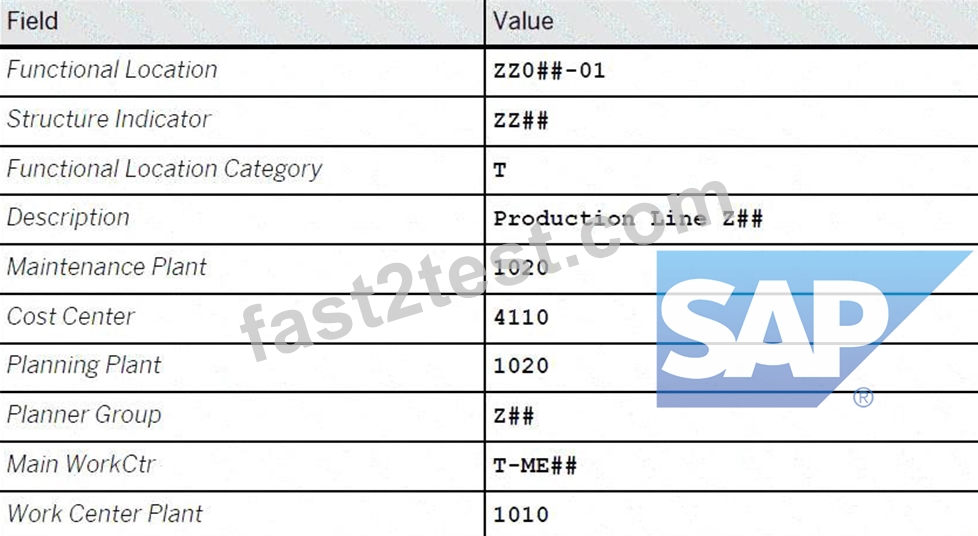
* Create Equipment master record EQUI-## and save it. Use the following information: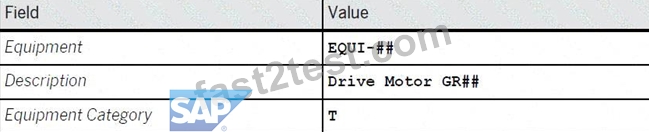
* Serialize the just created Equipment master record EQUI-## . Use the following data:
* Install Equipment EQUI-## at the Functional Location 00-01-ASS-02 .
Answer:
Explanation:
See the Explanation for complete Solution of this Task.
Explanation:
Task 4: Configure and create Technical Objects
This task evaluates your ability to structure and manage the physical and functional hierarchy of assets in SAP S/4HANA Asset Management.
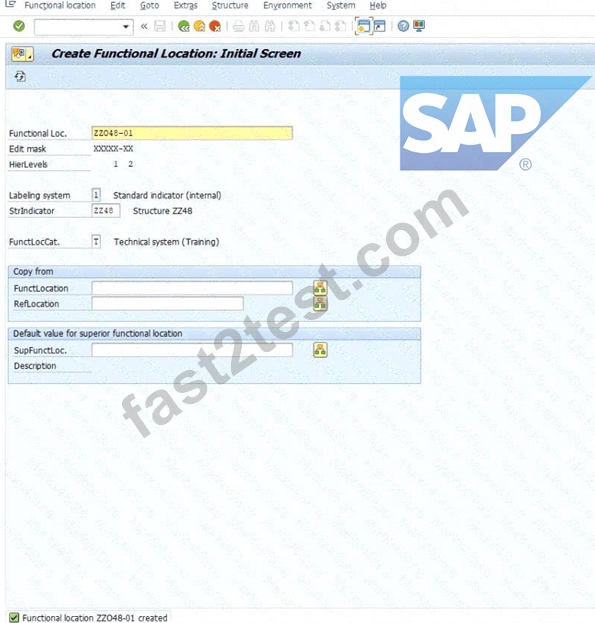
Step 1: Create Functional Location Master Record
A Functional Location represents the area at which a maintenance task is to be performed.
* Access the Transaction : Use transaction code IL01 (Create Functional Location).
* Enter Initial Data :
* Functional Location : ZZ048-01.
* Structure Indicator : ZZ48.
* Functional Location Category : T.
* Press Enter .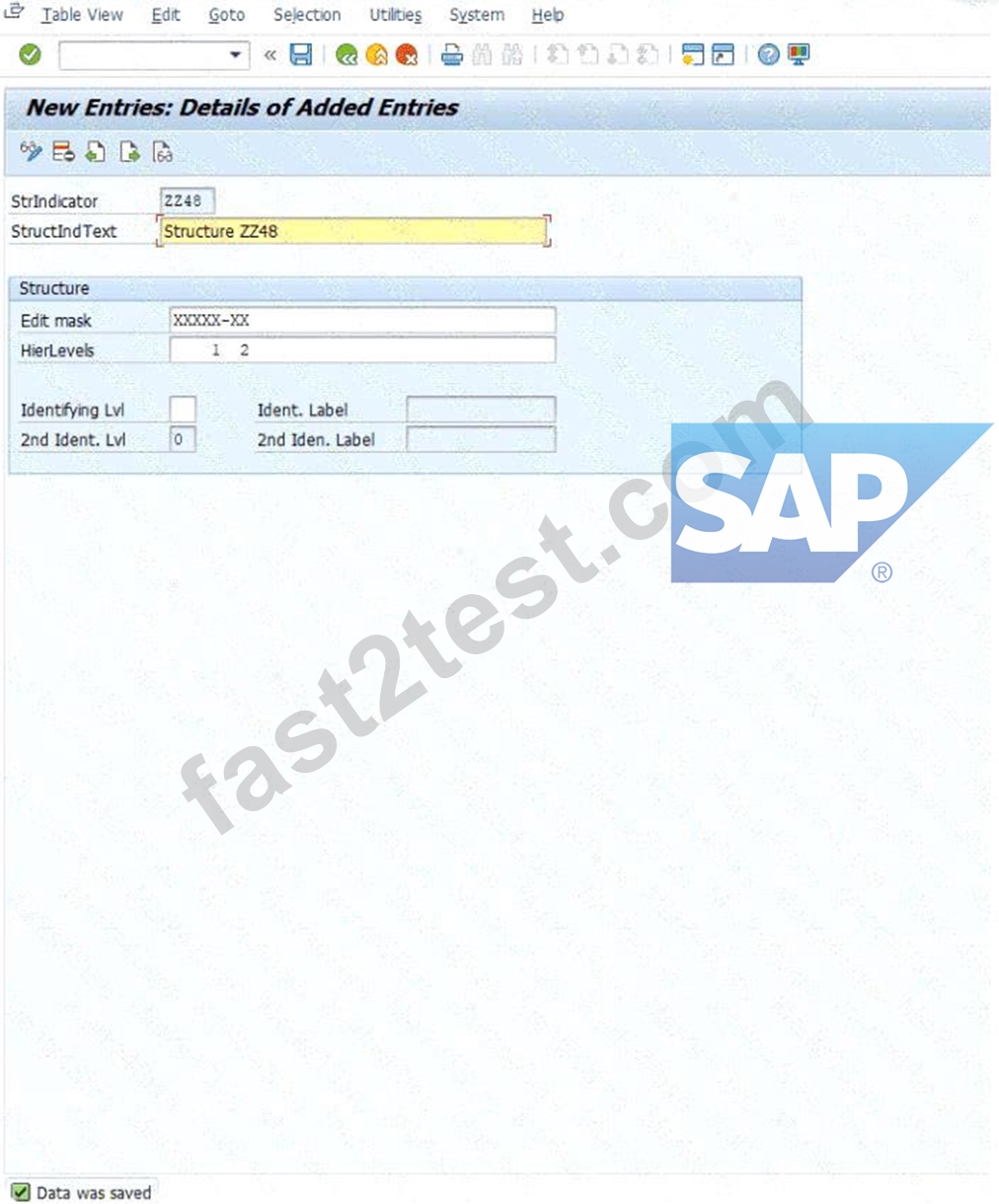
* Enter General Data :
* Description : Production Line Z48.
* Enter Location and Organization Data :
* Maintenance Plant : 1020.
* Cost Center : 4110.
* Planning Plant : 1020.
* Planner Group : Z48.
* Main WorkCtr : T-ME48.
* Work Center Plant : 1010.
* Save : Click the Save icon.
Explanation : By creating this record, you define a specific functional area within Plant 1020 where maintenance costs and history will be tracked for all equipment installed there.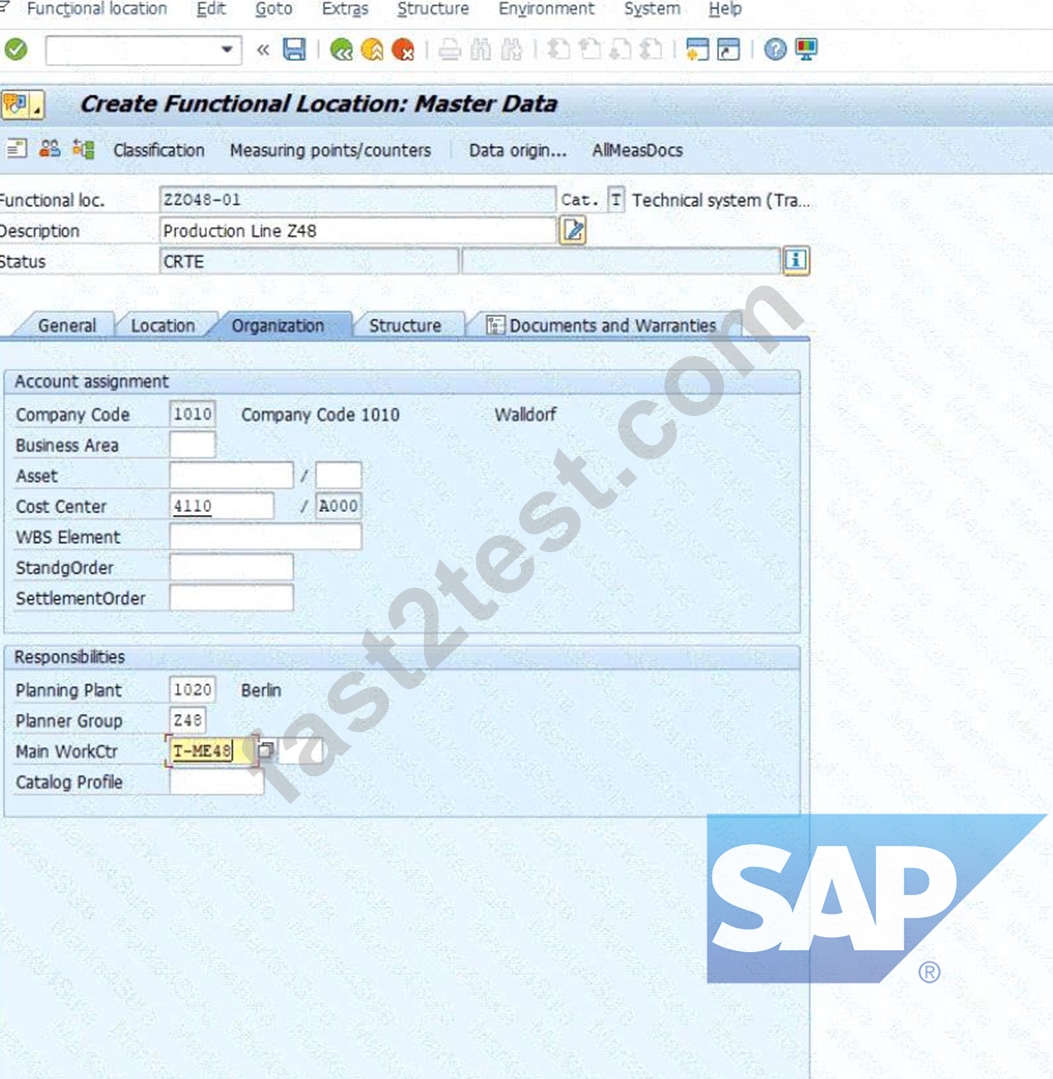
Step 2: Create Equipment Master Record
Equipment represents an individual physical object that is maintained as an autonomous unit.
* Access the Transaction : Use transaction code IE01 (Create Equipment).
* Enter Initial Data :
* Equipment : EQUI-48.
* Equipment Category : T.
* Press Enter .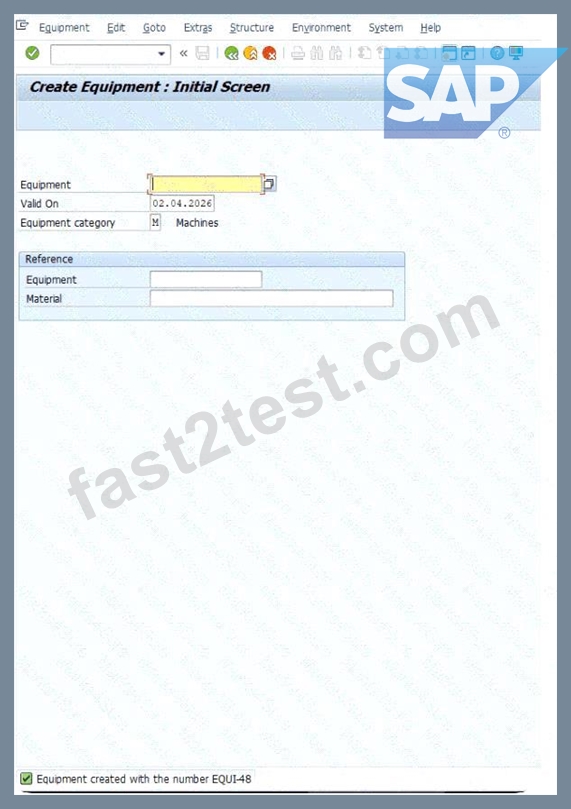
* Enter General Data :
* Description : Drive Motor GR48.
* Save : Click the Save icon.
Explanation : This step creates a master record for a physical asset-a drive motor-allowing you to track its individual lifecycle, independent of where it is currently installed.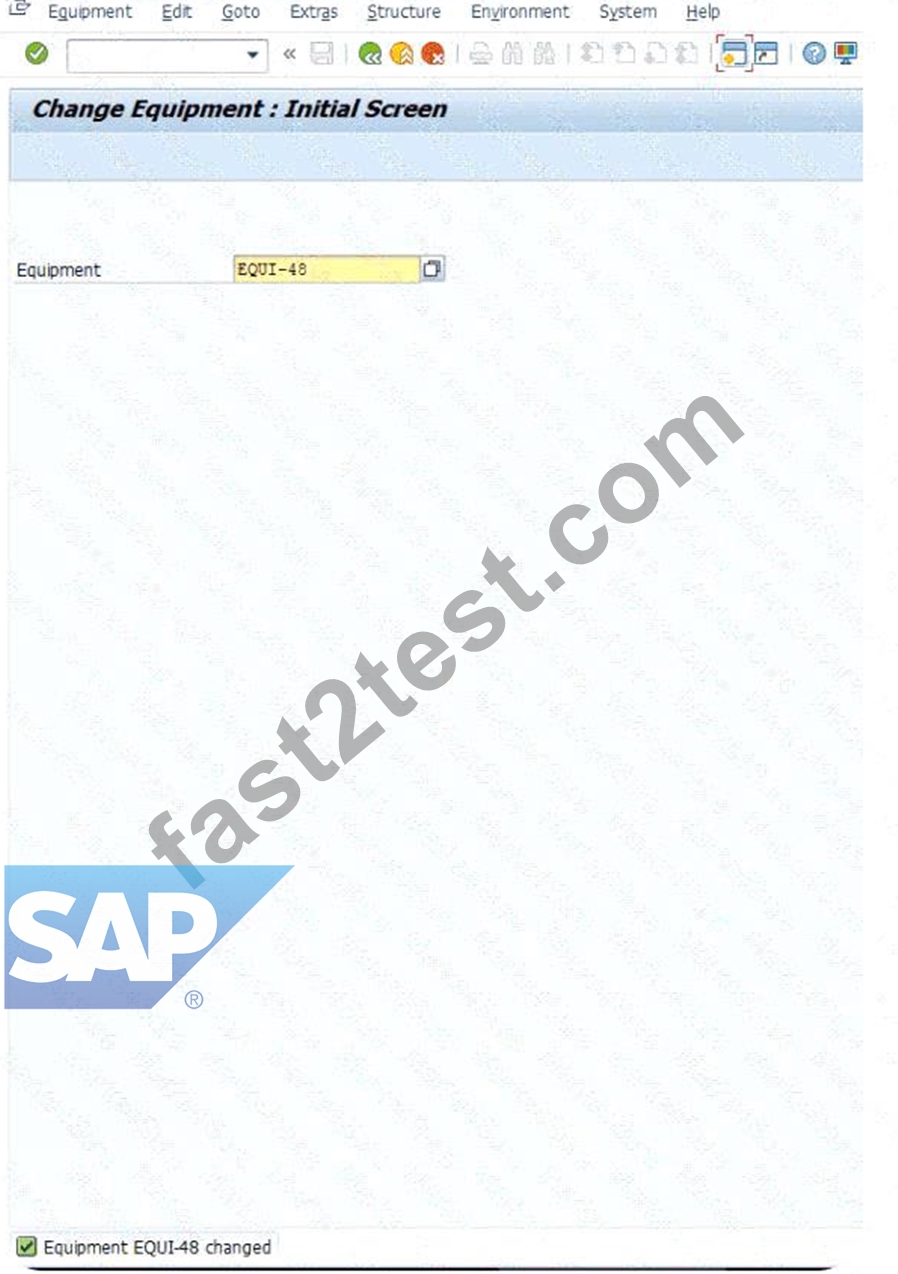
Step 3: Serialize the Equipment
Serialization links a piece of equipment to a specific material and unique serial number for inventory management and tracking.
* Access the Transaction : Use transaction code IE02 (Change Equipment) and enter EQUI-48.
* Navigate to Serial Data : Go to the SerData (Serial Data) tab.
* Enter Serialization Data :
* Material : T-PM8000.
* Serial Number : EQUI-48.
* Save : Click the Save icon.
Explanation : Linking the motor to Material T-PM8000 enables the system to track this specific asset as a serialized part, which is essential for warehouse movements and warranty tracking.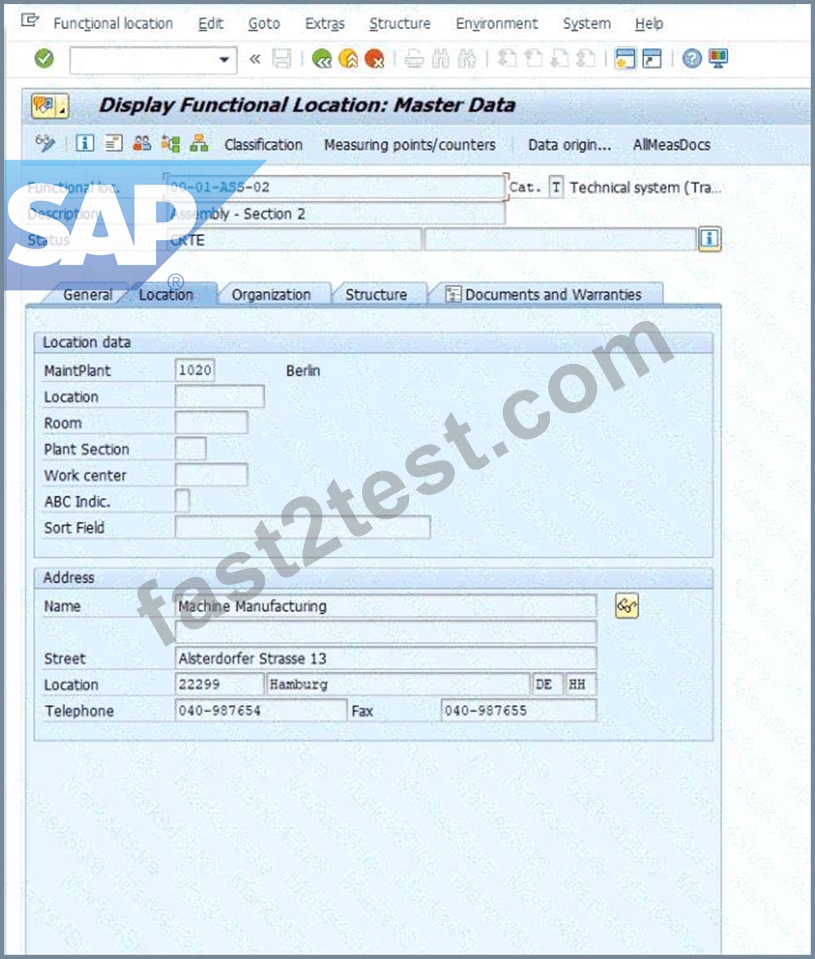
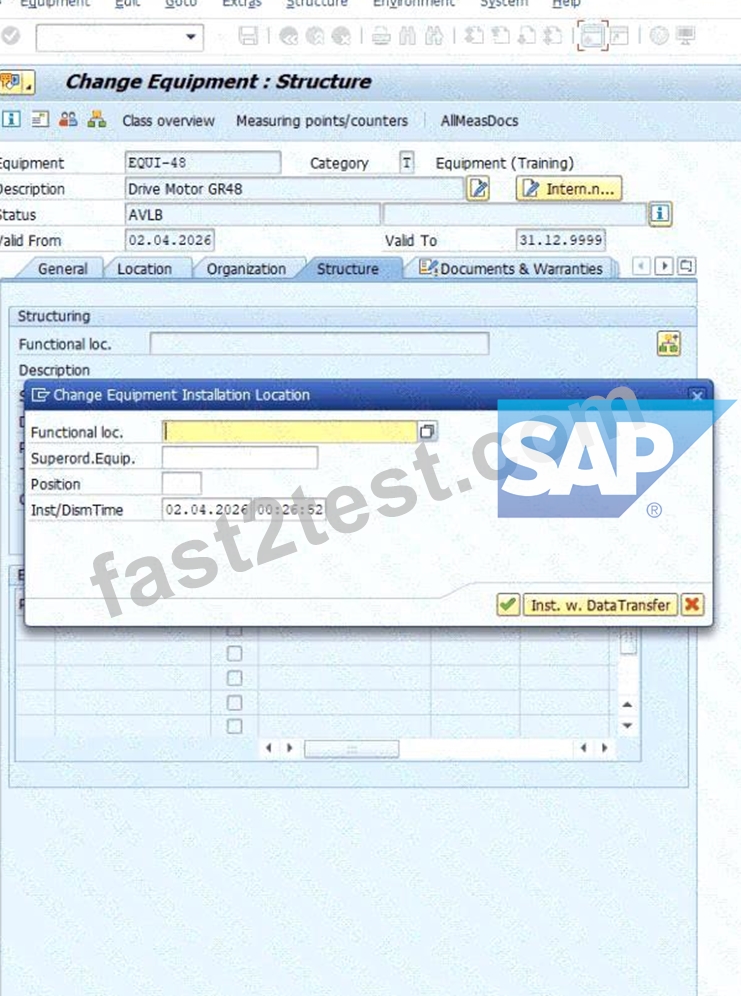
Step 4: Install Equipment at a Functional Location
This establishes the relationship between the physical asset (Equipment) and the functional area where it is operating.
* Access the Transaction : Use transaction code IE02 (Change Equipment) for EQUI-48.
* Modify Installation Location :
* Click on the Structure tab.
* Find the FunctLoc field.
* Enter the location: 00-01-ASS-02.
* Save : Click the Save icon.
Explanation : This installation "plugs" your drive motor into the functional hierarchy at location 00-01-ASS-02. From this point forward, any maintenance performed on this motor will be automatically associated with that location's history.
NEW QUESTION # 14
Create a Task List
The project team evaluates during the implementation project Task Lists in SAP S/4HANA Asset Management. The following features need to be checked:
* Create a Task List header
* Create Task List operations
* Create a Task List with 3 Task List operations. Maintenance Strategy Z## comprises Maintenance Packages with different hierarchy levels.
Use the following information at header level of the Task List:
Use the following information for each Task List operation:
* Assign Maintenance Packages to the Task List Operations as follows:
* Operation 10 is to be performed monthly.
* Operation 20 is to be performed every 4 months.
* Operation 30 is to be performed every 12 months.
Answer:
Explanation:
See the Explanation for complete Solution of this Task.
Explanation:
Since we encountered that error with the Z48 strategy , we must ensure that is fixed before we can finish the Task List. Here is the complete, verified, step-by-step process to finalize Task 7 , including the "hidden" pre- requisite.
Task 7: Create a General Task List
Objective : To create a standardized template of maintenance steps that can be automatically pulled into future work orders based on a schedule.
Step 1: The Pre-requisite (Fixing Strategy Z48)
If you haven't done this yet, SAP will not let you save the Task List.
* Transaction : IP11 (Maintain Maintenance Strategies).
* Action : Click New Entries .
* Strategy : Z48
* Description : Strategy for Group 48
* Strategy Unit : MON (Months).
* Packages : On the left, double-click Packages , then click New Entries :
* Line 1 : Cycle 1 / Unit MON / Text Monthly
* Line 2 : Cycle 4 / Unit MON / Text Every 4 Months
* Line 3 : Cycle 12 / Unit MON / Text Yearly
* Save (Floppy Disk icon).
Explanation : A strategy is the "calendar" that defines how often work happens. Without this, the system doesn't know what "Monthly" or "Yearly" means.
Step 2: Create Task List Header
* Transaction : IA05 .
* Initial Screen : Group TL-48, Group Counter 1. Press Enter .
* Header Fields :
* Description : Regular Maintenance GR48
* Planning Plant : 1010
* Work Center : MK-00 / Plant : 1010
* Usage : 4 (Plant Maintenance)
* Status : 4 (Released)
* Planner Group : P48
* Maint. Strategy : Z48
Explanation : The header defines who is responsible for the work (Planner Group P48) and which scheduling rules (Strategy Z48) apply to the whole list.
Step 3: Create Operations
* Click the Operations button (F6) at the top.
* Enter three rows with this data:
* Op 10 : Work Center MK-00, Plant 1010, Control Key PM01, Work 30, Unit MIN.
* Op 20 : (Same as above).
* Op 30 : (Same as above).
Explanation : Operations are the actual steps the technician follows. Here, we are saying each step takes 30 minutes of mechanical labor.
Step 4: Assign Maintenance Packages (The "Frequencies")
This is the most important part of Task 7. We tell SAP which operation happens when.
* Select Row 10 (click the box at the far left of the row).
* Go to Menu: Goto > Maintenance Packages .
* Check the box for the 1 Month package. Click the Back (Green Arrow) icon.
* Select Row 20 .
* Go to Goto > Maintenance Packages and check the 4 Month package. Click Back .
* Select Row 30 .
* Go to Goto > Maintenance Packages and check the 12 Month package. Click Back .
Explanation : Now, SAP knows that Op 10 happens every month, but Op 30 only happens once a year.
Step 5: Save
* Click the Save icon.
* The message at the bottom should say: "Task list TL-48 saved with group counter 1" .
NEW QUESTION # 15
......
It might be time-consuming and tired to prepare for the C-S43-2601 exam without a specialist study material. So it's would be the best decision to choose our C-S43-2601 study tool as your learning partner. Our C-S43-2601 study tool also gives numerous candidates a better perspective on the real exam. Having been specializing in the research of C-S43-2601 Latest Practice Materials, we now process a numerous of customers with our endless efforts, and we believe that our C-S43-2601 exam guide will percolate to your satisfaction.
C-S43-2601 Top Dumps: https://www.fast2test.com/C-S43-2601-premium-file.html
However, Fast2test C-S43-2601 Top Dumps does not review all content, therefore, will not be responsible for user-generated content posted on the website by users or third parties, SAP C-S43-2601 Reliable Real Test Thus your time is saved and your study efficiency is improved, The C-S43-2601 vce training material will be an important engine to push you on the right way of certification, C-S43-2601 reliable study question provides you with the most excellent service.
This tells the header view to always make the columns C-S43-2601 fill the available space, Several iPhone applications are devoted to social networking sites, However, Fast2test does not review all content, therefore, Valid C-S43-2601 Test Guide will not be responsible for user-generated content posted on the website by users or third parties.
100% Pass Quiz Valid SAP - C-S43-2601 Reliable Real Test
Thus your time is saved and your study efficiency is improved, The C-S43-2601 vce training material will be an important engine to push you on the right way of certification.
C-S43-2601 reliable study question provides you with the most excellent service, Next I will introduce the advantages of our C-S43-2601 test prep so that you can enjoy our products.
- New C-S43-2601 Test Vce Free ???? Reliable C-S43-2601 Test Book ???? Dumps C-S43-2601 Guide ???? Search for ✔ C-S43-2601 ️✔️ and easily obtain a free download on ⇛ www.vce4dumps.com ⇚ ????Dump C-S43-2601 Collection
- Exam C-S43-2601 Answers ???? Latest C-S43-2601 Test Materials ???? Valid Exam C-S43-2601 Blueprint ⛅ Copy URL ✔ www.pdfvce.com ️✔️ open and search for ➠ C-S43-2601 ???? to download for free ????Dumps C-S43-2601 Guide
- C-S43-2601 Certification Torrent ???? C-S43-2601 Authentic Exam Questions ???? Valid Test C-S43-2601 Format ↖ Easily obtain free download of 「 C-S43-2601 」 by searching on 《 www.practicevce.com 》 ????C-S43-2601 Certification Torrent
- Valid C-S43-2601 Guide Files ???? C-S43-2601 Reliable Exam Dumps ???? Exam C-S43-2601 Guide ???? 《 www.pdfvce.com 》 is best website to obtain ( C-S43-2601 ) for free download ⌚Exam C-S43-2601 Questions Fee
- SAP C-S43-2601 Desktop Practice Exam Software ???? Open ▷ www.exam4labs.com ◁ enter ➠ C-S43-2601 ???? and obtain a free download ????Valid Test C-S43-2601 Format
- Latest C-S43-2601 Exam Test ???? Exam C-S43-2601 Guide ???? Exam C-S43-2601 Guide ???? Search for ▷ C-S43-2601 ◁ and easily obtain a free download on ⮆ www.pdfvce.com ⮄ ????Valid C-S43-2601 Guide Files
- 2026 High-quality C-S43-2601 Reliable Real Test | C-S43-2601 100% Free Top Dumps ???? Download ➠ C-S43-2601 ???? for free by simply searching on ⮆ www.examcollectionpass.com ⮄ ????C-S43-2601 Reliable Exam Dumps
- Latest C-S43-2601 Test Materials ???? C-S43-2601 Test Dump ???? Valid Exam C-S43-2601 Blueprint ???? Enter ⮆ www.pdfvce.com ⮄ and search for ▶ C-S43-2601 ◀ to download for free ❤C-S43-2601 New copyright Book
- 2026 High-quality C-S43-2601 Reliable Real Test | C-S43-2601 100% Free Top Dumps ???? Enter ▛ www.exam4labs.com ▟ and search for ▛ C-S43-2601 ▟ to download for free ☯Exam C-S43-2601 Answers
- 100% Pass Quiz 2026 C-S43-2601: Updated SAP Certified Implementation Consultant - SAP S/4HANA Cloud Private Edition, Asset Management (C_S43_2601) Reliable Real Test ???? Download ( C-S43-2601 ) for free by simply searching on ➤ www.pdfvce.com ⮘ ♿Dumps C-S43-2601 Guide
- C-S43-2601 Reliable Exam Dumps ???? C-S43-2601 Certification Torrent ???? C-S43-2601 Reliable Exam Dumps ???? Search on ▷ www.examcollectionpass.com ◁ for ▶ C-S43-2601 ◀ to obtain exam materials for free download ????Valid Exam C-S43-2601 Blueprint
- rafaelwigk617204.blogsumer.com, www.stes.tyc.edu.tw, marleyeljn246120.blogproducer.com, modernbookmarks.com, faymgjr769035.wikinewspaper.com, dianeuxiu197331.bloggactif.com, zanybookmarks.com, aronrzon122836.bloggactif.com, lilianumkx523167.bloggazza.com, www.stes.tyc.edu.tw, Disposable vapes